Introduction
The term “fascisterne,” which translates from Danish as “the fascists,” refers to individuals, groups, or political movements associated with fascism. Fascism is one of the most controversial and historically significant political ideologies of the twentieth century. It shaped nations, triggered devastating wars, influenced authoritarian governments, and continues to be debated in modern political discussions. Understanding fascisterne requires a deep exploration of history, ideology, political systems, propaganda, nationalism, and the social conditions that allowed fascist movements to rise.
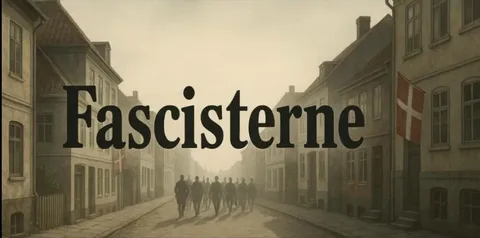
Although fascism first emerged prominently in Europe during the early 1900s, its influence stretched far beyond Italy and Germany. The ideology affected politics, economics, culture, military strategies, and international relations across multiple continents. Today, the word “fascist” is frequently used in political discourse, sometimes accurately and sometimes loosely. Therefore, examining what fascism truly means is essential for historical literacy and informed civic understanding.
This article provides a comprehensive overview of fascisterne, tracing the origins of fascism, analyzing its core principles, exploring major fascist regimes, discussing propaganda and authoritarian control, and examining the continued relevance of fascist ideas in the modern world.
The Origins of Fascism
Fascism emerged after World War I during a period of social unrest, economic instability, and political polarization. Europe was deeply traumatized by the war. Millions had died, economies were devastated, and many citizens lost trust in democratic institutions. In this unstable environment, radical political ideologies began gaining traction.
The birthplace of fascism was Italy. Benito Mussolini founded the Fascist movement in 1919. Originally a socialist journalist, Mussolini shifted toward nationalism and authoritarianism after the war. He appealed to Italians who were frustrated with economic hardship, political chaos, labor strikes, and fears of communist revolution.
The term “fascism” comes from the Latin word “fasces,” a bundle of rods with an axe symbolizing unity and authority in ancient Rome. Mussolini used this symbol to represent collective strength under centralized power.
The rise of fascisterne in Italy was fueled by several factors:
- Economic crisis and unemployment
- Fear of socialism and communism
- National humiliation after World War I
- Political instability
- Desire for strong leadership
Mussolini promised national revival, military strength, discipline, and order. In 1922, he led the famous March on Rome, pressuring King Victor Emmanuel III to appoint him prime minister. This event marked the beginning of fascist rule in Italy.
Core Principles of Fascism
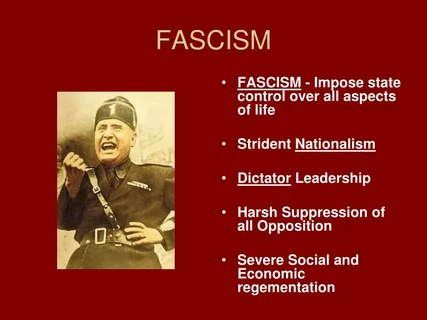
Although fascist movements varied across countries, most shared several defining characteristics. Fascisterne generally embraced authoritarian nationalism, militarism, anti-democratic governance, and centralized power.
Extreme Nationalism
Nationalism is central to fascist ideology. Fascisterne believed the nation was more important than individual rights or freedoms. Citizens were expected to sacrifice personal interests for the glory and survival of the state.
Fascist nationalism often promoted myths about national greatness, historical destiny, and cultural superiority. This intense patriotism frequently turned into hostility toward outsiders, minorities, immigrants, and neighboring nations.
Authoritarian Leadership
Fascist systems revolve around a powerful leader who is portrayed as the embodiment of the nation. Mussolini in Italy and Adolf Hitler in Germany cultivated personality cults that presented them as heroic saviors.
In fascist regimes, democratic institutions are weakened or eliminated. Elections become meaningless, opposition parties are banned, and criticism of the government is suppressed.
Militarism
Fascisterne glorified military strength, violence, and discipline. War was often viewed as noble and necessary for national expansion and renewal. Fascist governments invested heavily in armed forces and encouraged aggressive foreign policies.
Militarism also shaped everyday culture. Uniforms, marches, symbols, and military-style rituals became common features of fascist societies.
Anti-Communism
One reason many elites initially supported fascisterne was their strong opposition to communism and socialism. During the early twentieth century, wealthy industrialists and conservative politicians feared communist revolutions similar to the Bolshevik Revolution in Russia.
Fascist movements positioned themselves as defenders of private property, social hierarchy, and national unity against perceived communist threats.
Propaganda and Media Control
Fascist governments relied heavily on propaganda to influence public opinion. Newspapers, radio broadcasts, films, posters, and education systems were used to spread state-approved messages.
Propaganda portrayed fascist leaders as heroic figures while demonizing political enemies and minority groups. Through censorship and repetition, fascisterne shaped public perceptions and discouraged dissent.
Suppression of Opposition
Political freedom does not exist under fascism. Opposition parties, labor unions, independent journalists, and activists are targeted through intimidation, imprisonment, or violence.
Secret police organizations and surveillance systems are commonly used to maintain control. Fear becomes a central tool of governance.
Fascisterne in Italy
Italy under Mussolini became the first fascist state. Mussolini gradually dismantled democratic institutions and established a dictatorship. His government promoted nationalism, militarism, and loyalty to the state.
The fascist regime introduced extensive propaganda campaigns. Youth organizations indoctrinated children with fascist ideology. The media was tightly controlled, and critics were silenced.
Economically, Mussolini promoted a system called corporatism. This model attempted to organize industries into state-controlled associations representing employers and workers. In practice, however, the regime primarily benefited state power and industrial elites.
Mussolini also pursued imperial expansion. Italy invaded Ethiopia in 1935, demonstrating the regime’s aggressive ambitions. The invasion was condemned internationally but celebrated by fascist supporters as proof of Italian strength.
Eventually, Mussolini aligned closely with Nazi Germany, forming the Rome-Berlin Axis. This alliance would lead Italy into World War II alongside Adolf Hitler.
Fascisterne in Germany and the Rise of Nazism
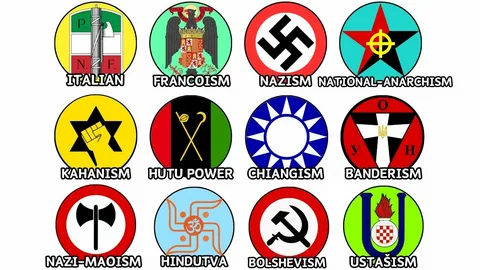
While Italian fascism influenced many movements, Nazi Germany became the most infamous fascist regime in history.
Adolf Hitler and the Nazi Party rose to power during the economic and political crisis of the Weimar Republic. Germany faced hyperinflation, unemployment, and national humiliation after World War I and the Treaty of Versailles.
Hitler exploited public anger by promising economic recovery, national revival, and the restoration of German pride. Nazi propaganda blamed Jews, communists, and other groups for Germany’s problems.
Nazism shared many characteristics with fascism:
- Dictatorial leadership
- Militarism
- Nationalism
- Anti-communism
- Suppression of opposition
However, Nazism placed extraordinary emphasis on racial ideology and antisemitism. Hitler’s belief in Aryan racial superiority became central to Nazi policies.
The Nazi regime implemented discriminatory laws against Jews and other minorities. These policies escalated into the Holocaust, the systematic murder of six million Jews and millions of others during World War II.
Under Nazi rule, Germany became a totalitarian state. The government controlled education, media, culture, and economic production. Fear and propaganda were used extensively to maintain obedience.
Fascism and World War II
The expansionist ambitions of fascisterne played a major role in causing World War II. Fascist regimes sought territorial conquest and military dominance.
Germany invaded Poland in 1939, triggering the war in Europe. Italy joined Germany as part of the Axis powers. Japan, though distinct from European fascism, shared authoritarian and militaristic characteristics and allied with Germany and Italy.
World War II became the deadliest conflict in human history. Tens of millions of people died, cities were destroyed, and entire populations suffered displacement and genocide.
The war ultimately ended in 1945 with the defeat of the Axis powers. Mussolini was captured and executed in Italy. Hitler died by suicide in Berlin as Soviet forces closed in on the city.
The horrors revealed after the war, especially the Holocaust, permanently shaped global attitudes toward fascism.
Propaganda and Psychological Manipulation
One of the most powerful tools used by fascisterne was propaganda. Fascist regimes understood the importance of controlling narratives and influencing emotions.
Propaganda campaigns appealed to fear, pride, anger, and hope. They simplified complex political problems into emotionally charged messages. Enemies were blamed for national decline, while leaders promised restoration and unity.
Common propaganda techniques included:
- Repetition of slogans
- Emotional speeches
- National symbols and flags
- Mass rallies
- Heroic imagery
- Controlled media reporting
- Censorship
The Nazi propaganda machine under Joseph Goebbels became especially sophisticated. Films, radio broadcasts, and public events were carefully orchestrated to shape public opinion.
Modern scholars often study fascist propaganda to understand how misinformation and emotional manipulation can influence societies.
The Role of Violence in Fascism
Violence was not merely a tool for fascisterne—it was often celebrated as necessary and heroic. Fascist movements used violence to intimidate opponents and demonstrate strength.
In Italy, Mussolini’s Blackshirts attacked socialist organizations and labor activists. In Germany, the Nazi SA and SS used brutality against political opponents and minority groups.
Fascist ideology often glorified struggle, sacrifice, and war. Violence was framed as a means of national purification and renewal.
This normalization of violence contributed to political repression, military aggression, and mass atrocities.
Economic Policies of Fascist Regimes
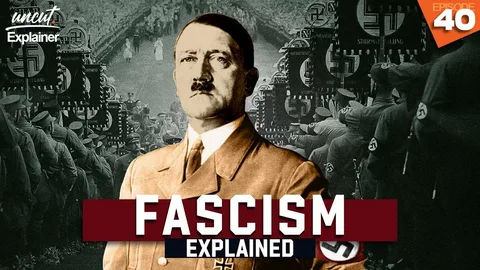
Fascist economies did not fit neatly into traditional capitalist or socialist categories. Instead, fascisterne favored state-directed economies that maintained private ownership while ensuring government control over key industries.
Characteristics of fascist economic systems included:
- Government intervention
- Military spending
- Public works projects
- Suppression of labor unions
- Cooperation between corporations and the state
In Nazi Germany, large infrastructure projects and military expansion reduced unemployment. However, economic growth was heavily tied to preparations for war.
Fascist governments prioritized national strength over economic freedom. Individual economic rights were often subordinate to state objectives.
Fascism and Culture
Fascisterne sought to control cultural expression as part of their broader effort to shape society.
Art, literature, film, music, and architecture were expected to promote national pride and support state ideology. Modernist or experimental art was often condemned as degenerate.
In Nazi Germany, books were burned, artists were censored, and cultural institutions were purged of dissenting voices. Similar patterns occurred in other fascist states.
Education systems also became instruments of indoctrination. Children were taught loyalty to the leader and obedience to the nation.
Women and Gender Roles in Fascist Societies
Fascist ideologies promoted traditional gender roles. Women were often encouraged to focus on motherhood, family, and domestic responsibilities.
In Nazi Germany, women were praised for producing children who would strengthen the nation. Policies rewarded large families and discouraged women from pursuing professional careers.
Men, meanwhile, were associated with military service, leadership, and physical strength.
Although some women supported fascist movements, feminist and independent women’s organizations were usually suppressed.
The Decline of Fascism After 1945
The defeat of the Axis powers severely discredited fascism internationally. Images of concentration camps, war crimes, and destruction shocked the world.
After World War II:
- Fascist parties were banned in several countries
- War crimes trials were conducted
- International institutions promoted democracy and human rights
- Many nations adopted constitutions designed to prevent authoritarianism
However, fascist ideas did not disappear entirely. Neo-fascist and far-right movements continued to emerge in different countries, often adapting their rhetoric to modern political conditions.
Neo-Fascism and Modern Extremism
In the decades after World War II, various groups attempted to revive or reinterpret fascist ideas. These movements are often described as neo-fascist.
Modern extremist groups may promote:
- Ethnic nationalism
- Anti-immigrant rhetoric
- Authoritarian politics
- Conspiracy theories
- Political violence
However, contemporary movements differ significantly from the original fascist regimes of the twentieth century. Historians and political scientists often debate how accurately the label “fascist” applies to modern organizations.
The misuse of the term in everyday political arguments has also complicated discussions. Not every authoritarian or nationalist movement qualifies as fascist in the historical sense.
Why Understanding Fascisterne Matters Today
Studying fascisterne remains important because fascism demonstrates how democratic societies can deteriorate under conditions of fear, polarization, and instability.
Several lessons emerge from history:
- Democratic institutions are fragile
- Propaganda can manipulate public opinion
- Economic crises can fuel extremism
- Political violence can escalate rapidly
- Human rights require constant protection
Education about fascism helps societies recognize warning signs of authoritarianism and defend democratic values.
Fascism in Academic Debate
Scholars continue debating the precise definition of fascism. Some emphasize nationalism and authoritarianism, while others focus on mass mobilization, revolutionary politics, or racial ideology.
Important questions include:
- Was fascism uniquely European?
- Can fascism exist without racism?
- Are modern authoritarian populist movements fascist?
- What social conditions enable fascism to grow?
Political scientists, historians, and sociologists study fascism from multiple perspectives, making it one of the most analyzed ideologies in modern history.
Media, Internet, and the Spread of Extremist Ideas
The digital age has changed how extremist ideologies spread. Social media platforms allow rapid distribution of propaganda, conspiracy theories, and political messaging.
Some modern extremist groups use online communities to recruit supporters and spread disinformation. Algorithms and echo chambers can amplify polarizing content.
Governments, educators, and technology companies continue debating how to balance free speech with efforts to combat hate speech and extremism.
Understanding historical fascist propaganda helps people critically evaluate modern media environments.
Common Misconceptions About Fascism
There are many misunderstandings surrounding fascisterne and fascism.
Fascism Is Not Simply Conservatism
Although some conservatives supported fascist regimes historically, fascism is distinct from traditional conservatism. Fascism seeks radical transformation through authoritarian nationalism and mass mobilization.
Fascism Is Not Identical to Communism
Both fascist and communist regimes have used authoritarian methods, but their ideological foundations differ significantly. Fascism emphasizes nationalism and hierarchy, while communism theoretically seeks class equality and international solidarity.
Not Every Dictatorship Is Fascist
Authoritarian governments exist in many forms. Fascism has specific ideological characteristics that distinguish it from other dictatorships.
The Legacy of Fascisterne
The legacy of fascisterne remains deeply influential in global politics and historical memory. Museums, memorials, documentaries, and educational programs continue teaching the dangers of fascism.
The Holocaust, World War II, and authoritarian repression left profound scars on humanity. These events shaped modern international law, human rights frameworks, and democratic institutions.
At the same time, historians emphasize the importance of nuanced analysis. Understanding why fascist movements gained support helps societies prevent similar patterns from recurring.
Conclusion
Fascisterne played a defining role in twentieth-century history. Fascism emerged from periods of crisis, instability, and fear, offering promises of strength, unity, and national revival while ultimately producing authoritarianism, violence, and war.
From Mussolini’s Italy to Hitler’s Germany, fascist regimes demonstrated how propaganda, nationalism, and centralized power can reshape societies and destroy democratic institutions. The consequences included political repression, global conflict, genocide, and immense human suffering.
Today, the study of fascism remains highly relevant. Modern societies continue confronting challenges related to extremism, propaganda, political polarization, and authoritarian tendencies. By understanding the history and ideology of fascisterne, individuals can better recognize threats to democracy and appreciate the importance of human rights, civic responsibility, and critical thinking.
The lessons of fascism are not merely historical—they are enduring reminders of the need to protect freedom, truth, and democratic values in every generation.